Read
All the jargon you’d ever want. Can’t say I’d recommend reading this cover-to-cover, but you’ll inevitably find several worlds that catch your eye. For me, it was:
- Hunting/Sabbing: the use of red text within the section to differentiate the practices was nicely done.
- Cresta Run: quite the deterrent photo
- Starbucks: watch out for the forbidden brownie, green beans
- London Black Cabs: oranges and lemons
Cute and nerdy, this collection of science cartoons by Tom Gauld was a fun treat.
I learned about this book from a New Yorker profile of the author. After adding a hold at the library, I promptly forgot about it, seeing as I was number two-hundred or so in line. It was a nice experience to pick it up recently, feeling fresh. I was worried initially, because Cambridge is name-dropped essentially every page starting out, but it finds a nice rhythm and goes much deeper than “going to hell”.
Plus, gotta love cheese toasties.
I found this book fascinating because it explores a topic we are all familiar with, but becomes more complex and nuanced the more you delve into it. You think you know emojis, so how hard could it be to make them work? Enter a world of near-infinite corner cases, groups vying for control in what reminded me of a Wikipedia Talk page, and the challenge of making a “walled garden” accommodate many people. It’s messy and complicated and will make you appreciate emojis all the more.
It takes a lot of effort to make a well-designed object. A book may seem straight forward, but Debbie Berne shows just how much there is to consider. I fall into the “curious readers” group of the book’s subtitle, and I found it interesting to see all the considerations made by a book designer (and many other players) to get to something you like to hold in your hands. I have dabbled with digital books before, but I always prefer interacting with a physical book. It is good to know that so many people work so hard to ensure the author’s creation shines on the printed page.
An adorable bookstore purchase, this manga includes a bunch of monster cats with magical powers. The cats in your life will definitely share some of the abilities with these cute and magical felines.
Written by an unknown author—that’s their photo in the cover’s bottom-right—Strange Pictures was a good mystery with a unique premise. The book, fittingly, uses images to help connect the dots of several lives in interesting ways. I enjoyed how some of the progressions where people were figuring out clues would include the methods that didn’t work, and those methods would still be shown visually. Relying on images to progress the story, I was reminded of The Curious Incident of the Dog in the Nighttime, which I read in school. This book takes it further, using the images in more intricate ways. While it was rather thrilling, I don’t know if I’d call it horror. I actually enjoyed this: for one it is hard to do proper jump scares in a book like in horror movies, but Strange Pictures was still able to keep things tense. Overall, a nice read, and I’ll be looking out for their other book as well.
It’s always a treat to see the artistry that graces The New Yorker each week. I like seeing a moment captured so succinctly on the page. If I’m honest, I idolize the publication and in my head can turn it into something larger than life. I enjoyed exploring this book and finding that making a cover is not larger than life, but something more important: human. It’s messy and imperfect and hard. While it’s cool to see some of the ideas we “were never meant to see,” it’s even more revealing to see the process. There are ideas and back-and-forth. It can change rapidly to respond to the times. Creating an issue’s cover can have as much care put into it as the words inside the issue. The racy and/or shocking ideas on the cutting room floor piqued my interest, but exploring the process was the thing I felt I was meant to see.
Seeing troublesome thought patterns written out makes them much easier to address. This book begins many sections by listing common trains of thought that lead to negative social approaches, which can be borne out of anxiety, shyness, and feelings of inadequacy. While many of these patterns seem ridiculous at first glance, I inevitably found some I related to strongly. It was helpful to see these feelings alongside others, making them feel more manageable to work through.
Fittingly, there’s an abundance of information to get through in this book. I found the discussion of housing at the start necessary, but the later sections on the funding of science were far more engaging. The final chapter serves as a nice culmination, presenting important questions to reshape the conversation. I thought they were good questions to leave on and though it is already a short read, I’d recommend starting with the concluding chapter. It alone is worth the price of admission.
With his background in storytelling, John Green’s adventures into nonfiction keep you enthralled while you learn new things. In this book, he explores the history and impact of tuberculosis, which has shaped our world by being one of the major causes of death throughout history, even though it has now become treatable. The miracle of the treatment and the madness of the disease’s prevalence is shown through a profile of Henry, a young patient with TB, that is threaded throughout the book. By exploring both the past and the present, John shows how the disease remains highly infectious, not just due to the bacteria’s resilience, but due to the choices humans make in addressing it’s prevalence.
I received this book over the holidays and absolutely inhaled it. The combination of fantastical creatures and a cozy cafe is irresistibly charming. There is an introverted pleasure in knowing the familiar cafe comforts—baked goods, barista cats—and watching them be discovered by characters in a mythical world. It paints a lovely picture, one that is a joy to inhabit.
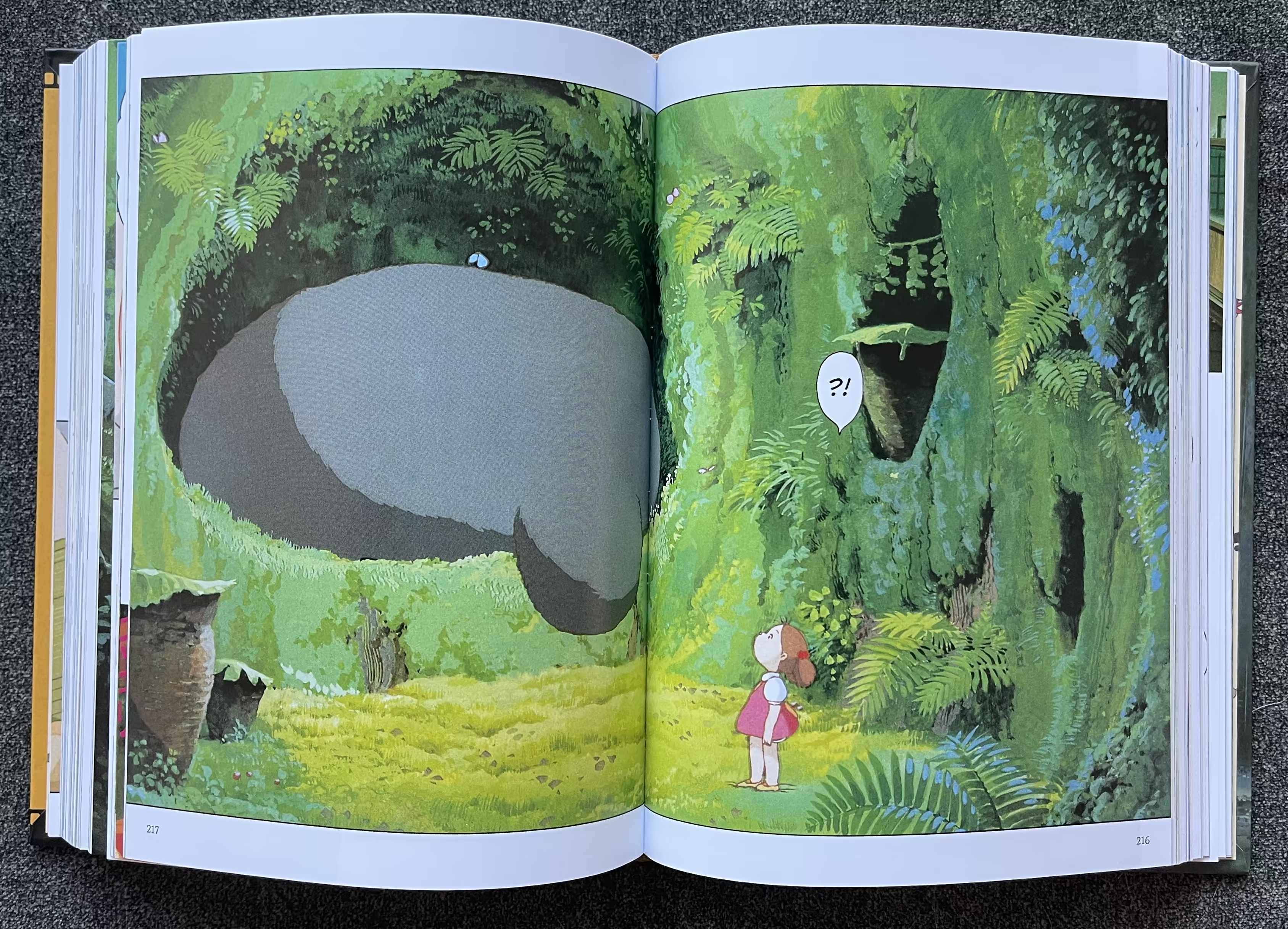
Nostalgia is a tricky thing to attempt to update. I have discovered over the years that I grew up with an English-dubbed VHS of My Neighbor Totoro originally used as an in-flight movie on Japan Airlines flights.1 Looking back at this movie on streaming services feels unwatchable because the language is different from my memory (Ex. Mei should say “Golly wolly pogs!”, not “Tadpoles!”, and many more minor quibbles). This all-in-one comic of the famous Hayao Miyazaki film has a similar phrasing misalignment compared to what I grew up with, but it remains readable because it offers some unique experiences.
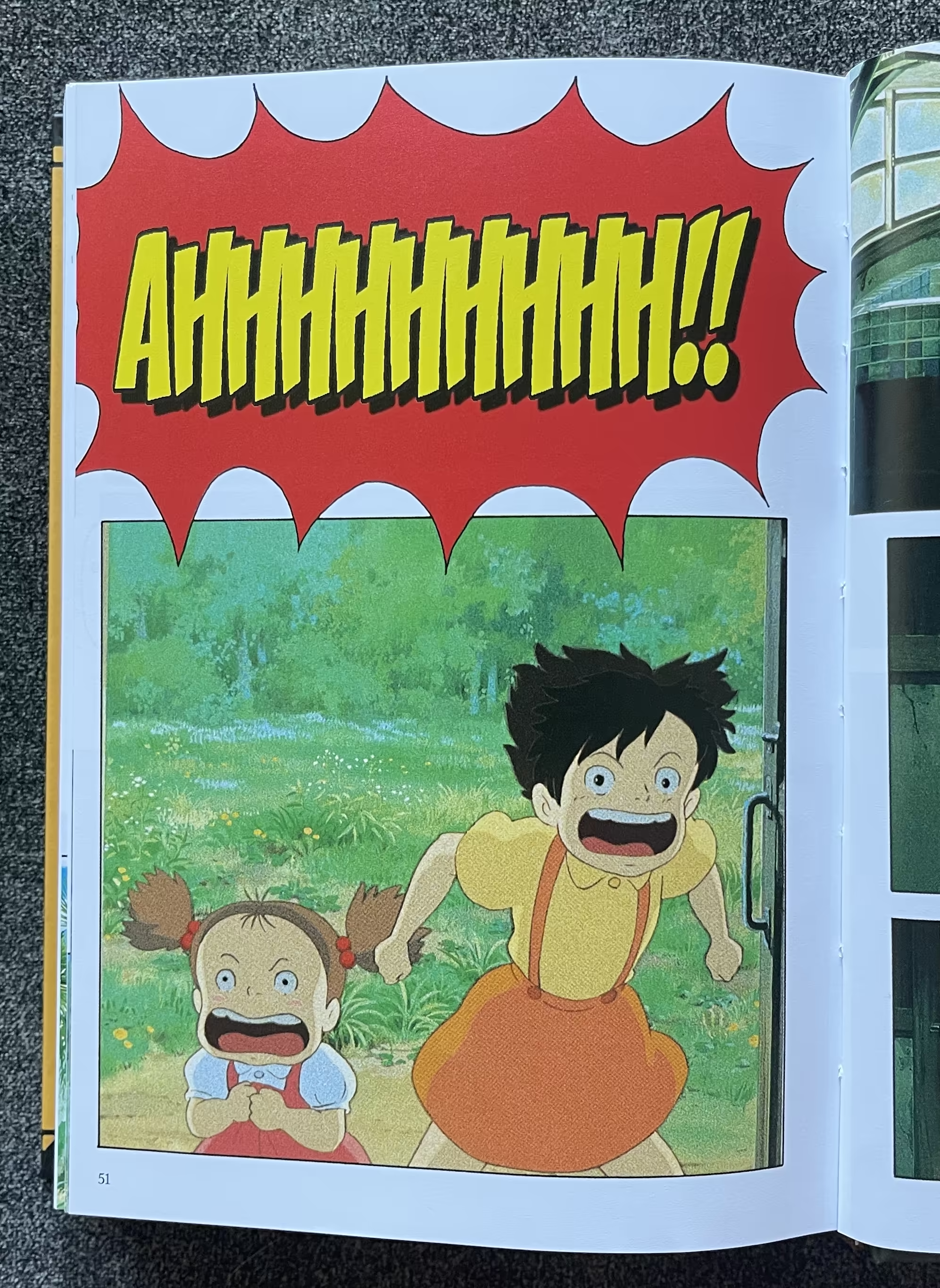
While nothing can compare to watching the film, the comic offers some fun moments, particularly with its treatment of sounds. The sisters’s yell into the void looks great with spiky red text bubbles and yellow type.
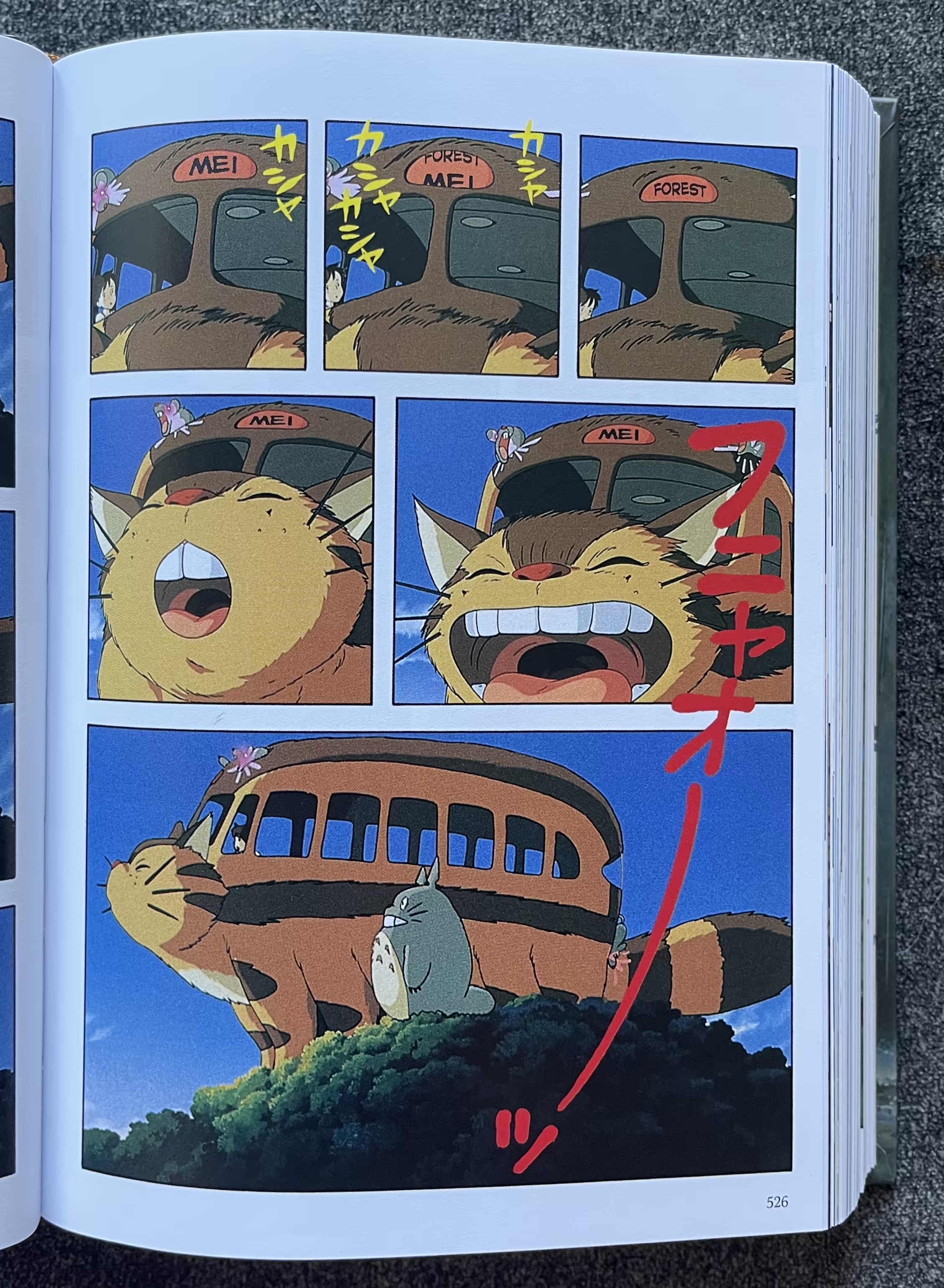
Also, the comic attempts to bridge the gap between paper and screen with sound effects. In the back, there is a full glossary of sounds written using katakana “to increase your enjoyment of the distinctive Japanese visual style” of the film. For example, here are some catbus sounds:
KASHA KASHA KASHA [klak klak klak]
BUNYAAAAA [Maaaeioow]
Though they may clash with the words and sounds from my formative first viewing, this book provides a new layer to this nostalgic film.
Footnotes
-
My Neighbor Totoro - Wikipedia page has some info on the different English dubs. ↩
Malcolm Gladwell returns to the idea of the epidemic, and their confounding behaviors, by looking to explain what caused the opioid crisis. By exploring disparate areas like cheetah breeding, the Harvard women’s rugby team, and the Holocaust (with a capital-H), he works to explain surprising outcomes with common rules, such as the Law of the Very Very Few and the Rule of the Third. The ending presents a set of convincing causes. However, the moment that stuck with me the most came from Gladwell’s recent TED talk, where he explores the tipping point he got wrong: the concept of broken windows.
While the book paints a picture of epidemics, the more pressing lesson is to present information in a way that embraces the fact that the understanding of a situation can change.
Not the facts, but our understanding of them.
An issue of Timothy McSweeney’s Quarterly Concern is always a unique experience, but First Fiction provides a unique set of milestones. This edition features ten pieces by ten authors, each making their publishing debut. Each story is presented as a separate booklet with custom artwork, all housed in a neon-orange accordion pocket sleeve adorned with a floral pattern designed by Elena Boils.
The collection offers a mix of stories, ranging from gutting fish to using stilts in a bank. I finished on a personal high note with “Specimens” by Sam Krowchenko, a well-crafted story of a doctor’s assistant involved in an unconventional quest to preserve knowledge, complemented by beautiful cover art from Emmanuel Lantam.
Like many of the contributors, Sam is already working on something larger. This issue offers ten diverse beginnings, and it will be exciting to see where these talented artists take their careers.
A beautiful piece, where a woman’s plans are quickly derailed and then trigger a cascade of emotional unraveling and existential questioning. It is impressive how much feeling is packed into a set of private experiences. To an external observer it would all seem uneventful, yet internally it contains intimate, raw, vulnerable, and honest portrayals of a rich, complex life.
A shy high school student (see Hikikomori) inherits his grandfather’s bookstore, then one day a talking cat appears and takes him on missions to save books. The talking cat is the hook, but it includes some nice challenges to reading-related “villains”, like hoarding and abridging texts. A clean and crisp story, where the missions reminded me of Willy Wonka trials, Zelda dungeons, the SpongeBob episode “Karate Island”, and the Sherlock episode “The Final Problem”. Also, like Die Hard, it is secretly Christmas-themed.
A charming sextet of stories where a father-daughter duo researches lost food memories and recreates the dishes for patrons of their hard-to-find restaurant in Kyoto. The similar beats of each story are soothing rather than repetitive, and the certainty that the mystery will be solved makes it more satisfying to see the patron’s reaction, like a regular watching a naive foodie discover their hidden gem.
A sweet old Swede befriends an octopus to solve a years-old mystery. The octopus narrates its experiences with short chapters, speaking about “the consequences” of being out of the tank. A collection of seemingly unrelated story threads takes time to establish, during which “the consequences” can be felt by the reader, but eventually the water returns and the threads are tied off in a nice literary bow.
This uplifting collection of experiences from booksellers and librarians around the country has enough variety to remain a page-turner. From joy to grief, from loving to banning books, it shows the power of knowledge and the power of the medium’s community.
The author documents and reflects on conversations with her therapist as she explores her experiences with depression, anxiety, and self-doubt. Universal, yet unique, the postscript essays wonderfully complement the recordings between therapist and patient. A deceptively simple and refreshingly frank memoir.
Being a devoted New Yorker reader, I came across Adrian’s book through the Briefly Noted section of the magazine. I picked it up and quickly inhaled it over two days. It is a lovely collection of frequent questions he has received through his PO box, woven into a look into his process, his history of cartooning, and his personal connection to his craft. It was impressive to see the effort taken toward a New Yorker cover, from initial sketches, to revisions, to inking, to being the big deal around town, to back to being a cartoonist. Also, I was pleasantly surprised to find a cover of his currently hanging on my wall. A quick read, but a pleasant one.

“Eternal Youth” by Adrian Tomine
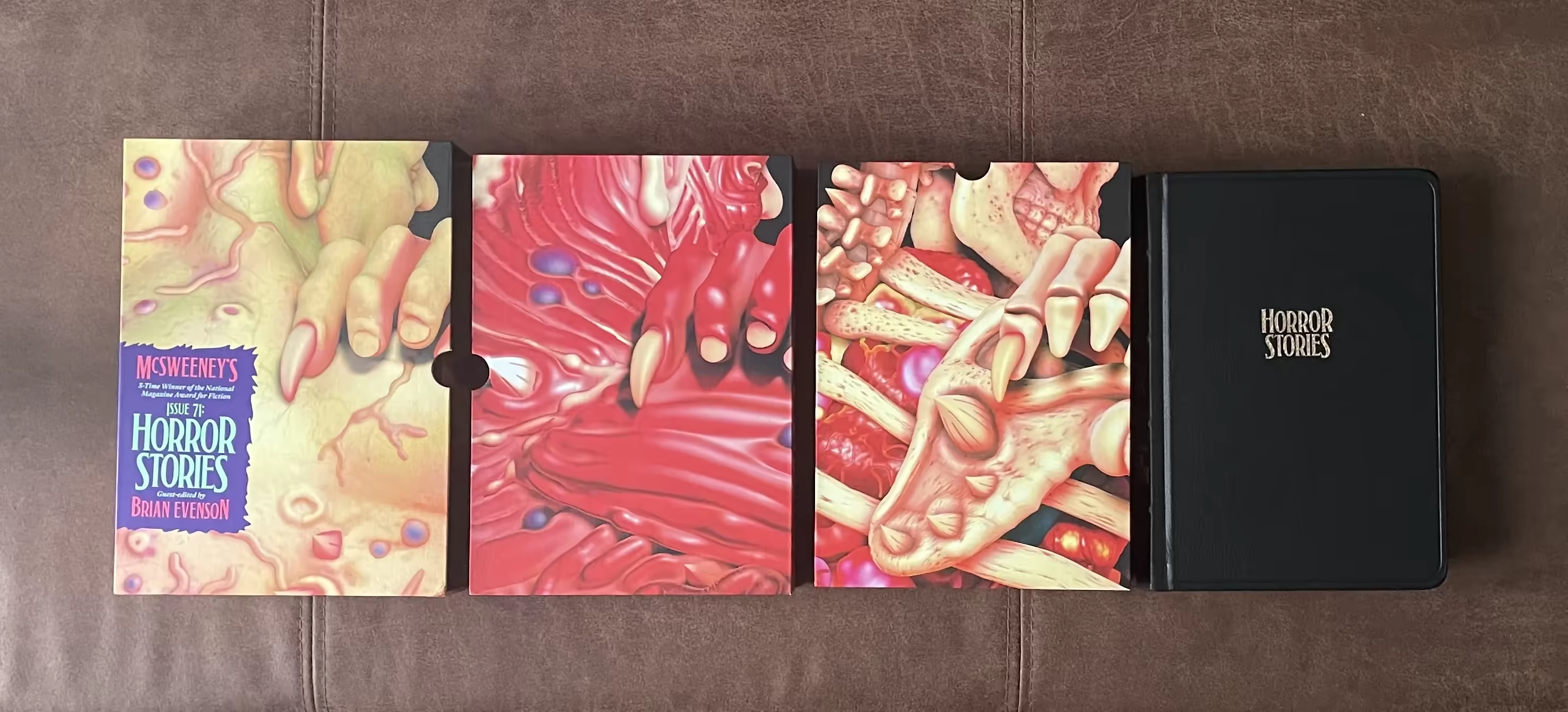
Having a subscription like Timothy McSweeney’s Quarterly Concern is a welcome surprise because you don’t know what’s going to arrive in the mail, from a pocketbook to a lunchbox. Sadly, I haven’t been giving them enough love, instead opening them up and admiring the new form they take, only to put them up on a weirdly stacked shelf. So, given the time of year, it felt like a good time to revisit McSweeney’s 71: The Monstrous and the Terrible, and fully unpack its contents.
This edition features a collection of horror stories, bound in a black leather cover and encapsulated three-times-over in slip covers showing different layers of a disfigured being, from battered skin into the muscles and down to the bones and organs. The stories within have a classical layout, punctuated by pastel neon orange chapter headers with typography you could easily cut your finger on. I also particularly enjoyed the drop caps, which evoked a winter forest crossed with a circulatory system.
Reading horror is an interesting activity because the words essentially tee up your own mind to scare itself. It is hard to do a jump scare with text, but I did find myself worried about some of the creatures described within the stories. I enjoyed “The Pond God” by Lincoln Michel, which has hallmarks of Stranger Things crossed with an ending that reminded me of the ending to the movie An Education. I also liked the aptly named “Don’t Go Into the Woods Alone” by Gabino Iglesias, which is advice everyone seems to forget till it’s too late. It is fitting that the book is securely contained within many protective layers, though I’m not entirely sure whether the focus is on preserving the contents or discouraging scared readers.
Overall, this edition helps to get you in the mood for the fall season, as long as you don’t mind a little scariness amongst the pumpkins and the spices.
Matt Parker is always thrilled to talk about maths. In Love Triangle, he uses a fundamental shape as an inroad to many different subjects, from GPS to the physics of rainbows. And while he keeps it nerdy, he also is able to keep it approachable. Don’t picture a textbook, picture an adventure log of a person determined to have a good time sharing his joy of all things mathematics.
I particularly enjoy how his books have math all through them. In this love-letter to the triangle and other trigonometric things, the page numbers are expressed using sin(), meaning they become floating-point numbers that go up and down as you read (if that makes you grin, you will also enjoy his previous book on maths errors, Humble Pi, where the page numbers count backward and crash when they underflow). The index has a similarly nerdy twist.
If you are new to Matt Parker’s work, this is an excellent place to start. He makes it easy to follow along and when an interesting idea pops into your head, chances are he actually made that idea happen. I’d also recommend his YouTube channel Stand-up Maths, which shows how interesting and fun math can be (recent funzies: crazy jigsaw puzzles, filming a YouTube video on 35mm film, and playing with a mathematically impossible football).
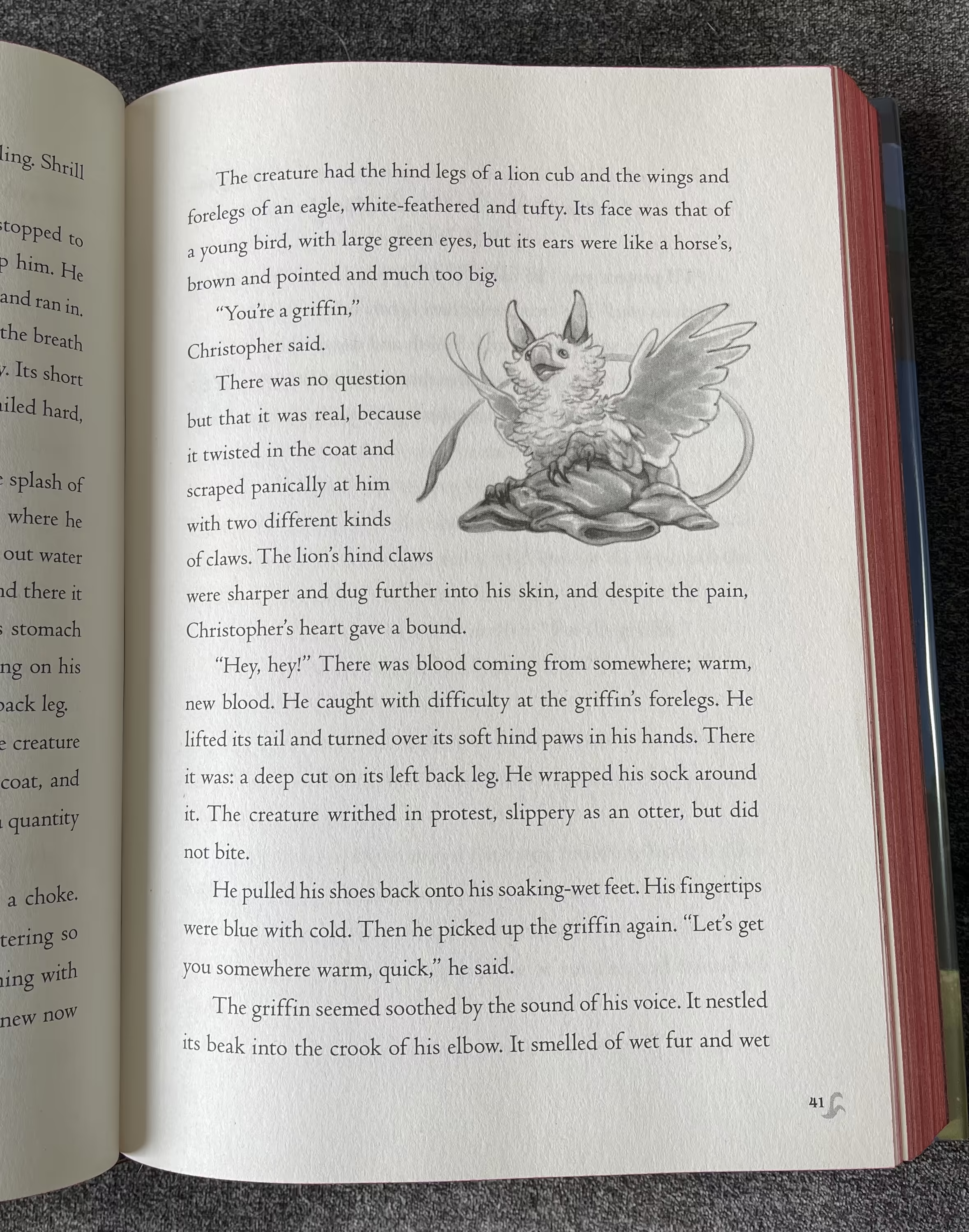
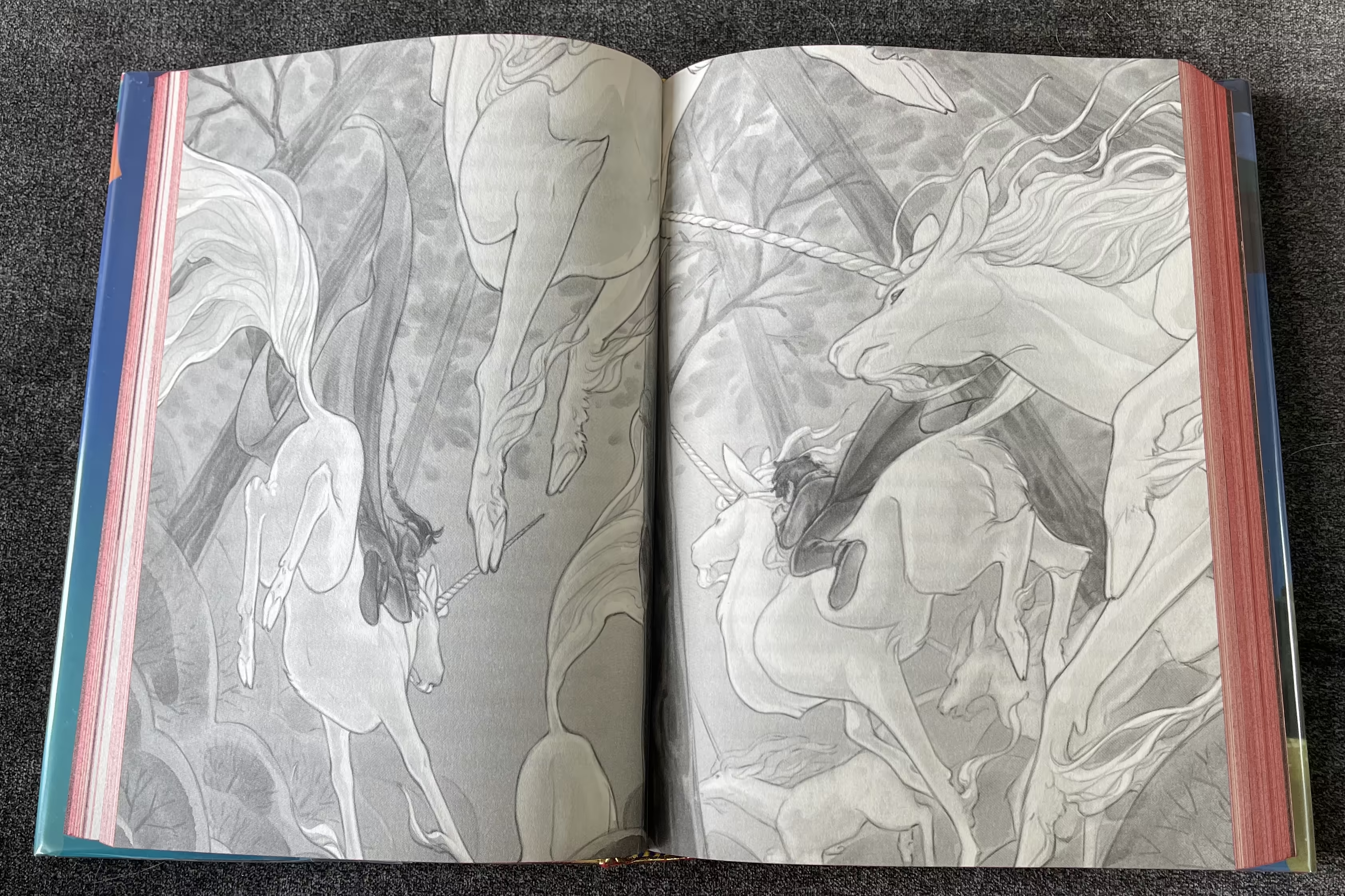
After discovering the Archipelago—a hidden cluster of islands teeming with mythical creatures—Christopher must fight to save it from destruction. The book features some delightful scenes with fantastical beings, though the world-building felt somewhat shallow. Shout-out to illustrator Ashley Mackenzie for her beautiful drawings, which are cleverly integrated throughout the pages. The title lettering by Jason Carne is also striking, and the use of Centaur MT Pro Sharp gives the punctuation a distinctive, spiky punch. A simple but pleasant read.